Quick answer
NDIS community participation goals should begin with participant goals, preferences, communication needs and practical support requirements. The right approach is individual, respectful and reviewed with the participant, rather than based on assumptions about diagnosis or funding.

Check current information in the official NDIS guidance on setting NDIS goals.
A useful community participation goal describes what the person wants in their life, not only the service they want to purchase. Strong goals connect interests and relationships with barriers, support needs and meaningful indicators of progress.
This guide is written for participants, families and supporters preparing for planning or reviewing whether current goals remain useful. Its purpose is to help readers develop clear, personal goals that guide practical support while leaving room for participant choice. It provides general information, not an individual funding decision or professional advice. NDIS rules, pricing and government policy can change, so time-sensitive details should be checked against current official sources and the participant’s own plan before action is taken.
The strongest approach is person-centred and evidence-informed. That means starting with the participant’s goals and daily life, distinguishing verified facts from assumptions, and asking how a proposed support will work in practice. It also means being honest when information is incomplete. A provider can explain its service and availability, but it cannot guarantee funding, eligibility, a particular plan outcome or a perfect match.
Begin with what matters to the person
This part of NDIS community participation goals focuses on interests, identities, relationships, places, roles and experiences the participant values. Begin with the person’s preferred outcome and then work backwards to the assistance, environment, information and decisions required. Describe what success would feel like to the participant, as well as what could make the arrangement unsafe, exhausting or unsuitable. A useful discussion includes examples from real routines and identifies where knowledge is incomplete. It avoids treating diagnosis, age or funding category as a substitute for understanding the individual.
Check the issue from several viewpoints without losing sight of the participant. What does the person want? What do workers need to deliver support safely? What information does a family member or guardian hold? What must a support coordinator, clinician, provider or NDIA decision-maker contribute? Clear role boundaries prevent duplicated work and unrealistic promises. They also reveal when a delay is caused by missing evidence, unavailable service capacity, an unresolved funding question or a decision that belongs to another organisation.
Describe the life outcome, not the provider
When reviewing avoiding goals that lock the participant into one organisation, activity or service model, separate verified information from expectation. The participant may already know what works from previous homes, workers, activities or transitions. That experience is valuable evidence. Providers and referrers should explain any operational limits clearly, including staffing, scheduling, travel, availability or funding assumptions. The goal is not to remove every uncertainty before moving forward. It is to make the important uncertainty visible and agree on how it will be tested, monitored or resolved.
The review should also ask how this decision will affect the rest of the week. A change that solves one problem may create transport pressure, reduce community contact, interrupt sleep, increase family responsibility or make worker continuity harder. Map those downstream effects before treating the option as settled. Where trade-offs remain, explain them plainly and give the participant time to decide. Informed choice includes the right to understand disadvantages, not only the benefits presented by a provider.
Identify the barrier honestly
A person-centred approach to communication, confidence, mobility, sensory load, transport, safety, access or limited informal support is practical, not decorative language. It means offering information in a format the participant can use, allowing processing time, involving trusted people with consent and documenting the person’s preferences accurately. It also means discussing competing needs honestly. In shared services or complex support arrangements, one person’s preference may affect another person’s routine or safety. The response should look for a fair, least-restrictive solution and explain who will review it if the first approach does not work.
Make the next step observable. This might be a written cost breakdown, a second visit, a roster discussion, confirmation of accessibility, a worker introduction, updated evidence or a call with the relevant decision-maker. Avoid vague actions such as “monitor” or “follow up” without naming who, what and when. At the review point, ask whether the agreed action occurred, what changed for the participant and whether the original concern remains. This creates accountability without turning everyday support into unnecessary bureaucracy.
Connect support to the barrier
For this decision, focus closely on explaining what assistance makes participation possible or more sustainable. Ask for concrete examples rather than general assurances. Who completes the task? When does it happen? What changes on weekends, public holidays or difficult days? How are unplanned needs handled? What information reaches the participant and authorised supporters? Specific answers reveal whether a proposed arrangement is understood and sustainable. They also make it easier to compare providers or support models without reducing the decision to price, availability or marketing presentation.
Write down what is confirmed, what still needs clarification and what would make the option unsuitable. Consider communication, culture, relationships, health routines, mobility, sensory needs, privacy, transport and timing where they are relevant. The participant’s experience remains central. Families and professionals may contribute important context, but they should not replace the person’s voice. End the discussion with plain-language actions, a responsible contact and a realistic review date so the issue does not disappear into meeting notes.
Use language the participant understands
The practical issue here is plain wording, preferred communication and avoiding professional language that hides the person’s voice. It needs to be considered through the participant’s actual week, not a generic idea of how disability support usually works. For participants, families and supporters preparing for planning or reviewing whether current goals remain useful, ask what this looks like on an ordinary day, who is responsible, what evidence or observation supports the approach and how the participant can express agreement, discomfort or a wish to change direction. The answer should connect the person’s goal with specific support and realistic limits. A brochure statement or a broad promise is not enough when the detail will shape daily life.
A small trial or staged approach may provide better information than another long meeting. Agree on what will be tried, how long it will run, what support will be available and how the participant can stop or change the trial. Record observations respectfully and include the participant’s own feedback. The purpose is to learn whether the arrangement supports the person’s goal, not to pressure them to prove they can tolerate an option that was poorly matched from the beginning.
Balance specificity with choice
This part of NDIS community participation goals focuses on being clear enough to guide support without narrowing the goal to one fixed weekly activity. Begin with the person’s preferred outcome and then work backwards to the assistance, environment, information and decisions required. Describe what success would feel like to the participant, as well as what could make the arrangement unsafe, exhausting or unsuitable. A useful discussion includes examples from real routines and identifies where knowledge is incomplete. It avoids treating diagnosis, age or funding category as a substitute for understanding the individual.
Check the issue from several viewpoints without losing sight of the participant. What does the person want? What do workers need to deliver support safely? What information does a family member or guardian hold? What must a support coordinator, clinician, provider or NDIA decision-maker contribute? Clear role boundaries prevent duplicated work and unrealistic promises. They also reveal when a delay is caused by missing evidence, unavailable service capacity, an unresolved funding question or a decision that belongs to another organisation.
Think about frequency and pacing
When reviewing what is realistic given energy, health, routines, funding and the time needed to build confidence, separate verified information from expectation. The participant may already know what works from previous homes, workers, activities or transitions. That experience is valuable evidence. Providers and referrers should explain any operational limits clearly, including staffing, scheduling, travel, availability or funding assumptions. The goal is not to remove every uncertainty before moving forward. It is to make the important uncertainty visible and agree on how it will be tested, monitored or resolved.
The review should also ask how this decision will affect the rest of the week. A change that solves one problem may create transport pressure, reduce community contact, interrupt sleep, increase family responsibility or make worker continuity harder. Map those downstream effects before treating the option as settled. Where trade-offs remain, explain them plainly and give the participant time to decide. Informed choice includes the right to understand disadvantages, not only the benefits presented by a provider.
Notice progress that matters
A person-centred approach to choice, comfort, relationships, skills, consistency and reduced barriers rather than attendance alone is practical, not decorative language. It means offering information in a format the participant can use, allowing processing time, involving trusted people with consent and documenting the person’s preferences accurately. It also means discussing competing needs honestly. In shared services or complex support arrangements, one person’s preference may affect another person’s routine or safety. The response should look for a fair, least-restrictive solution and explain who will review it if the first approach does not work.
Make the next step observable. This might be a written cost breakdown, a second visit, a roster discussion, confirmation of accessibility, a worker introduction, updated evidence or a call with the relevant decision-maker. Avoid vague actions such as “monitor” or “follow up” without naming who, what and when. At the review point, ask whether the agreed action occurred, what changed for the participant and whether the original concern remains. This creates accountability without turning everyday support into unnecessary bureaucracy.
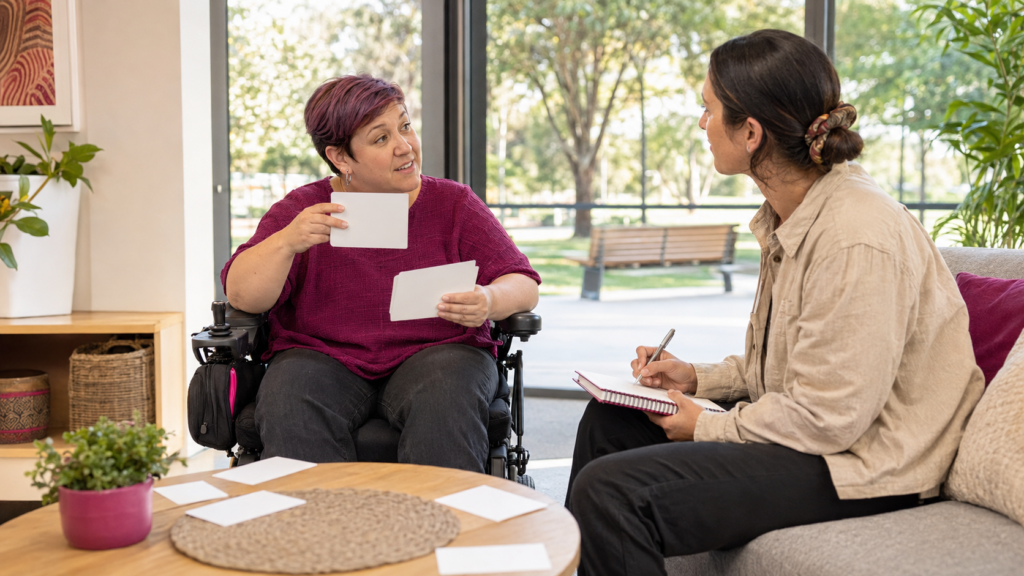
Prepare examples for a planning conversation
For this decision, focus closely on real situations that show current barriers and what changes with appropriate support. Ask for concrete examples rather than general assurances. Who completes the task? When does it happen? What changes on weekends, public holidays or difficult days? How are unplanned needs handled? What information reaches the participant and authorised supporters? Specific answers reveal whether a proposed arrangement is understood and sustainable. They also make it easier to compare providers or support models without reducing the decision to price, availability or marketing presentation.
Write down what is confirmed, what still needs clarification and what would make the option unsuitable. Consider communication, culture, relationships, health routines, mobility, sensory needs, privacy, transport and timing where they are relevant. The participant’s experience remains central. Families and professionals may contribute important context, but they should not replace the person’s voice. End the discussion with plain-language actions, a responsible contact and a realistic review date so the issue does not disappear into meeting notes.
Review goals as life changes
The practical issue here is updating priorities when interests, relationships, health, living arrangements or opportunities change. It needs to be considered through the participant’s actual week, not a generic idea of how disability support usually works. For participants, families and supporters preparing for planning or reviewing whether current goals remain useful, ask what this looks like on an ordinary day, who is responsible, what evidence or observation supports the approach and how the participant can express agreement, discomfort or a wish to change direction. The answer should connect the person’s goal with specific support and realistic limits. A brochure statement or a broad promise is not enough when the detail will shape daily life.
A small trial or staged approach may provide better information than another long meeting. Agree on what will be tried, how long it will run, what support will be available and how the participant can stop or change the trial. Record observations respectfully and include the participant’s own feedback. The purpose is to learn whether the arrangement supports the person’s goal, not to pressure them to prove they can tolerate an option that was poorly matched from the beginning.
A practical decision checklist
Before making a decision about NDIS community participation goals, confirm the primary goal, the participant’s preferred outcome, current funding or plan information, required support, important risks, communication needs and any time constraints. Separate essential requirements from preferences that may be negotiable. This helps everyone focus on genuine fit instead of being distracted by presentation, urgency or assumptions about what a participant should want.
Ask for written information about responsibilities, costs, schedules, cancellations, information sharing, feedback and review. Where a provider is involved, ask who will coordinate the next step and how the participant can contact them. Where several organisations are involved, identify the boundary between each role. A support coordinator may organise evidence and communication, a provider may assess service suitability, and the NDIA makes decisions within its authority. Clear boundaries reduce duplication and prevent promises that one party cannot deliver.
Use a simple traffic-light review. Green items are confirmed and suitable. Amber items need more information, a trial or a documented adjustment. Red items create a serious mismatch or unresolved safety concern. The aim is not to score a provider or participant. It is to make uncertainty visible and support an informed choice. Keep the record brief, accessible and available to the participant in their preferred format.
Applying this guide in Canberra and Queanbeyan
Local knowledge matters because transport, service coverage, workforce availability, community access and travel time vary across Canberra and Queanbeyan. A support arrangement that looks suitable on paper may be difficult to sustain if shifts are fragmented, transport is unclear or the participant’s important relationships are far from the proposed location. Discuss the full weekly pattern, not only the single appointment, activity or vacancy that triggered the enquiry.
CCS works with participants and authorised stakeholders to understand goals, support needs and service fit. An initial conversation can clarify what CCS currently offers, what information is needed and whether a more detailed suitability process is appropriate. It should also identify when another service, professional or decision-maker needs to be involved. A clear “not suitable at this time” is more respectful than leaving a participant with an indefinite or misleading expectation.
Frequently asked questions
Is NDIS community participation goals automatically funded by the NDIS? No. Funding and plan decisions depend on the participant’s individual circumstances, goals, assessed needs and current NDIS requirements. A provider can discuss service suitability but cannot guarantee an NDIA decision.
What should I bring to a first conversation? Begin with the participant’s goals, current situation, relevant plan information, preferred contact method, support needs and the main decision you are trying to make. If consent or formal decision-making arrangements apply, explain them clearly. Do not delay an initial enquiry simply because every document is not yet available, but be honest about gaps.
How do I know whether a provider is person-centred? Look for specific examples of how participants make choices, give feedback, influence routines and change support. Ask what happens when the person disagrees, when a worker match is poor or when the original plan is not working. General values statements are useful only when daily practice supports them.
Should cost be the deciding factor? Cost matters and must be transparent, but it should be considered alongside suitability, quality, continuity, safety and the participant’s goals. Ask for a written explanation of funded support, travel, cancellations and personal expenses before agreeing.
When should the arrangement be reviewed? Review at agreed intervals and whenever needs, risks, goals, living arrangements, workers, funding or important relationships change. A review should include the participant’s experience and result in clear actions, not only a completed form.
Next steps
Use the internal links below to move from this topic to the most relevant related guide. If you are ready to discuss CCS services, prepare a short summary of the participant’s goals, location, preferred schedule, support needs and the outcome you are seeking. This allows the first conversation to focus on suitability and practical next steps.
Nothing in this article should pressure a participant to choose CCS or any particular support model. Participants have the right to ask questions, compare providers, involve trusted people and take reasonable time to decide. The right next step may be a service discussion, more evidence, a home visit, a planning conversation or deciding that an option is not suitable.