There’s a meaningful difference between home care that helps someone live well and home care that quietly does everything for them. Both can look similar on the surface – a support worker present, tasks getting done – but one builds capability over time and the other can gradually erode it. Here’s how to tell the difference and structure routines toward the former.
Why this distinction matters
home care routines independence should begin with participant goals, preferences, communication needs and practical support requirements. The right approach is individual, respectful and reviewed with the participant, rather than based on assumptions about diagnosis or funding.
Check current information in the official NDIS guidance on Core supports.
The NDIS is built around the idea of building capacity, not just managing a disability indefinitely. Home care that consistently does tasks for a participant, rather than with them, can inadvertently reduce confidence and skill over time – the opposite of what the funding is meant to achieve, even when delivered with good intentions.
What dependence-building support tends to look like
A support worker who always cooks the entire meal rather than involving the participant, who takes over a task at the first sign of difficulty rather than working through it together, or who defaults to doing things “because it’s faster” is unintentionally building dependence rather than capability.
What independence-building support tends to look like
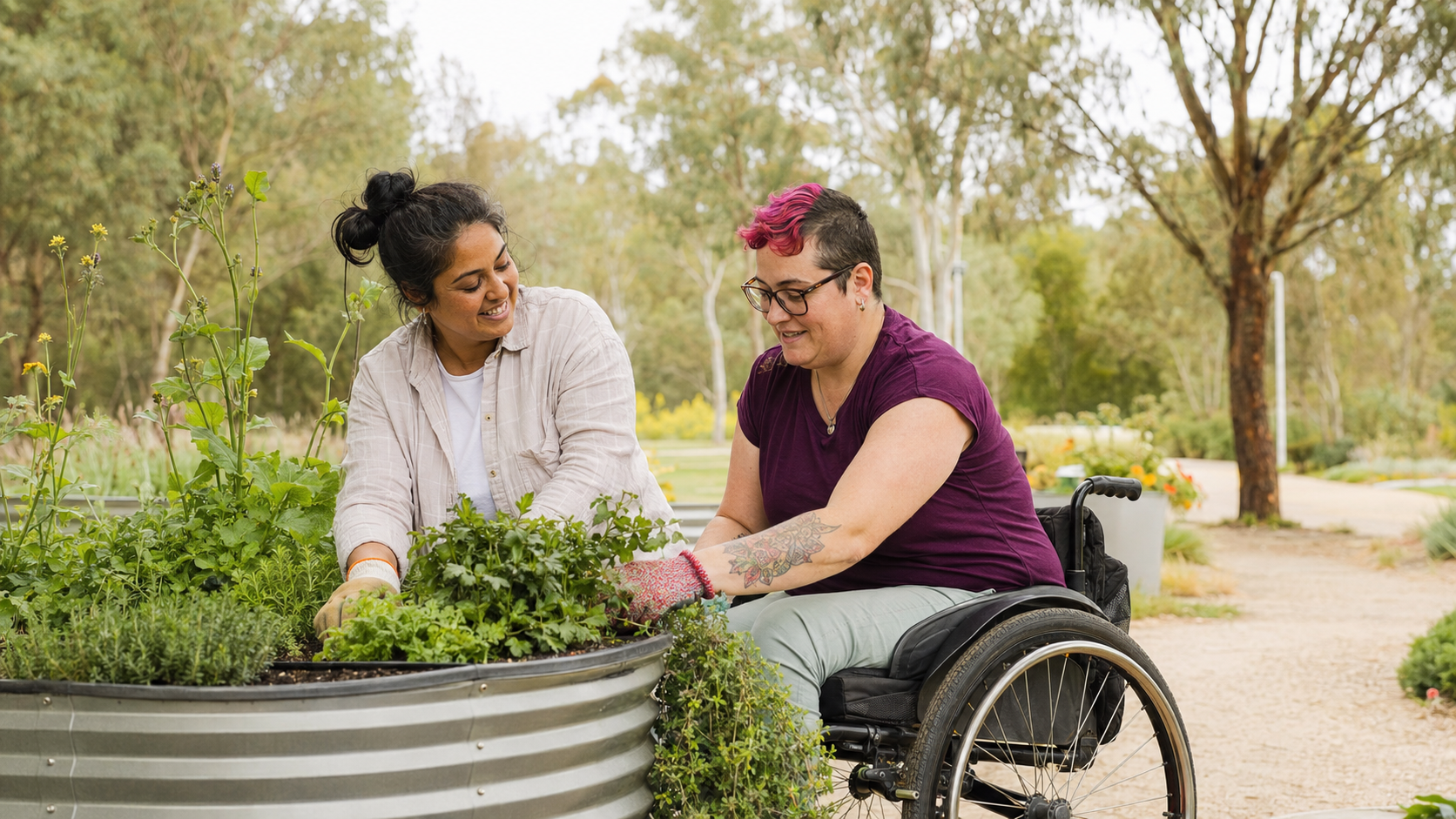
The same task – say, preparing a meal – looks different when a support worker cooks alongside the participant, breaking tasks into manageable steps, allowing extra time, and gradually stepping back as confidence builds. It takes more patience initially but tends to produce genuinely better outcomes over months.
This isn’t about withholding help
Building independence doesn’t mean refusing to assist or making someone struggle unnecessarily. Some tasks genuinely need full support, and that’s entirely appropriate. The distinction is about being intentional – knowing which tasks are being fully supported versus which are being used as opportunities to build skill, rather than defaulting to full support everywhere out of habit or convenience.
How to brief a new provider on this
Be specific when starting with a new support worker or provider about which tasks you want full support with, and which you want to build capability in over time. This kind of clarity upfront makes a real difference to how support actually gets delivered day to day.
Reviewing routines over time
What’s appropriate can and should shift – a task that needed full support six months ago might now be one you’re managing more independently, or vice versa if circumstances change. Periodically reviewing this with your provider, rather than letting a routine calcify unreviewed for years, keeps support genuinely matched to current need.
Signs your current routine might be building dependence unintentionally
Worth noticing: tasks you used to manage partially that you no longer attempt at all, a support worker who seems to prefer doing things themselves rather than involving you, or a general sense that your confidence with certain daily tasks has quietly decreased rather than grown.
Talking to your provider about this
This is a completely reasonable thing to raise directly – most good providers welcome the conversation, since it helps them deliver support that genuinely matches your goals rather than a generic default approach.
Why the “doing it for you” model falls short
It’s tempting for support workers, especially under time pressure, to simply complete tasks themselves rather than involve the participant – it’s often faster in the moment. But this approach, repeated over time, can erode confidence and skill rather than build it. Genuinely capacity-building support takes a little longer initially but pays off in growing independence, which is usually the actual goal behind most daily living funding.
What building independence actually looks like day to day
In practice, this might mean a worker guiding a participant through preparing a meal step by step rather than preparing it alone, or teaching a load of laundry rather than simply doing it. It requires patience and a genuine teaching mindset from support workers, and a willingness from providers to measure success by growing participant confidence and skill, not just tasks completed.
Setting goals around independence explicitly
Rather than leaving this to chance, it helps to explicitly discuss and document specific independence-building goals with your provider – which tasks you want to build confidence in, over what kind of timeframe, and how progress will be tracked. Vague intentions rarely translate into real change; specific, agreed goals do.
Recognising when dependence has crept in
Signs that support has drifted toward creating dependence rather than building independence include a participant who’s become less confident over time rather than more, tasks that were once managed independently now requiring full assistance, or a general sense that support has plateaued rather than progressing. These are worth raising directly with your provider if you notice them.
How this connects to your broader plan
Independence-building in daily living support connects naturally to broader NDIS goals around capacity building more generally. If your plan includes Capacity Building funding for specific skill development, it’s worth checking that your daily living support is genuinely aligned with these goals, rather than operating as a separate, purely task-focused arrangement.
Talking to your provider about this approach
If you’re not confident your current daily living support is genuinely building independence, raise this directly – ask specifically how they approach skill-building versus simple task completion, and whether they track progress toward greater independence over time. Get in touch to talk through what a genuinely capacity-building approach could look like for your specific situation.
Balancing independence-building with genuine needs
Building independence doesn’t mean pushing participants beyond what’s genuinely safe or realistic for them – some tasks may always require assistance due to the nature of a person’s disability, and that’s entirely appropriate. The goal isn’t independence in every single task, but growing capability wherever it’s genuinely achievable, while maintaining appropriate support for tasks that will always need it.
What good routines actually look like
Strong daily living routines tend to share common features: consistency in timing and approach, clear step-by-step structure that participants can gradually internalise, and built-in flexibility for bad days without abandoning the underlying structure entirely. A worker who helps establish this kind of routine, rather than improvising differently each visit, tends to support more meaningful long-term progress.
The role of positive reinforcement
Genuine progress toward independence is built through consistent encouragement and recognition of small wins, not just correction when something goes wrong. Workers who notice and acknowledge growing confidence – even in small ways – help reinforce the behaviours and skills that lead to greater independence over time.
How families can support this approach at home
Independence-building works best when it’s reinforced consistently, not just during scheduled support sessions. If family members are involved in day-to-day life, understanding and supporting the same approach – encouraging participation rather than doing things for a person out of convenience – helps skills genuinely stick rather than being undone between visits.
Measuring progress in a meaningful way
Rather than vague impressions of “doing better,” it helps to track independence-building progress in specific, observable terms – a task that used to require full assistance now needing only prompting, or a routine that’s become noticeably faster and smoother over a set period. A good provider will help establish these kinds of concrete markers and revisit them periodically, rather than leaving progress entirely to subjective impression.
What to do when progress plateaus
It’s normal for progress toward independence to plateau at certain points, and this doesn’t necessarily mean something has gone wrong. Sometimes a plateau reflects a genuine ceiling for a specific task given a person’s circumstances; other times it reflects an approach that needs adjusting. Distinguishing between these two scenarios, ideally with input from an occupational therapist or other relevant allied health professional, helps determine whether to adjust the approach or accept a stable, appropriately supported routine.
How routines evolve as circumstances change
Life circumstances change – a house move, a change in health, a new goal – and daily living routines need to evolve accordingly rather than remaining static. A good provider treats routines as living arrangements that adapt over time, regularly checking whether the current approach still reflects what’s genuinely needed, rather than continuing an established pattern purely out of habit.
The link between routine and broader wellbeing
Well-structured daily routines contribute to broader wellbeing beyond the specific tasks involved – predictability and a sense of control over one’s own daily life are linked to better mental health and overall life satisfaction. This is worth keeping in mind as a reason to invest genuine effort in getting daily routines right, beyond simply the practical benefit of completed tasks.
Working with allied health professionals
Occupational therapists and other allied health professionals can play a valuable role in designing independence-building routines, providing specific, evidence-based strategies tailored to a participant’s particular needs and goals. If your daily living support isn’t currently informed by this kind of allied health input, it’s worth discussing whether adding it to your plan could strengthen the approach.
What genuine partnership looks like in daily routines
The best daily living support feels like a genuine partnership between participant and worker, built around shared goals rather than a one-directional service delivery model. This means participants having real input into how routines are structured, workers genuinely listening to feedback about what’s working and what isn’t, and both sides treating the relationship as collaborative rather than purely transactional.
How this shows up in worker training and culture
Providers genuinely committed to building independence, rather than just completing tasks, tend to reflect this in how they train and support their own workers – emphasising teaching skills, patience, and a strengths-based mindset rather than simply efficient task completion. It’s reasonable to ask a prospective provider directly how their training approach reflects this philosophy, as it’s a meaningful indicator of what to expect in practice.
Bringing it all together
Daily living support that genuinely builds independence rather than dependence requires intentional design – clear goals, consistent routines, workers trained to teach rather than simply do, and regular honest reflection on whether progress is genuinely being made. This approach takes more deliberate effort than simply having tasks completed, but it delivers considerably more value over the life of a plan.
If your current daily living support feels more like a service being done to you rather than a partnership building genuine capability, it’s worth having a direct conversation about shifting toward this kind of approach – the difference in long-term outcomes is usually significant.
Recognising When a Routine Needs Adjusting
Independence-building routines aren’t fixed forever, they should shift as your confidence and capability grow. A support worker who’s paying attention will notice when a task that once needed full assistance now only needs light prompting, and will flag this as an opportunity to step back rather than continuing the same level of help by default.
It’s worth raising this directly with your provider if you feel ready to take on more yourself. The goal of good daily living support isn’t to keep things exactly as they are, it’s to keep moving you toward the level of independence that’s realistic and meaningful for you. For more on what this kind of support actually covers, see our guide on what NDIS Assistance with Daily Life includes, or visit our Home Care hub for the full picture.
It’s also worth having an honest conversation with your Support Coordinator about how progress toward independence is being tracked over time. Without a clear way of noticing change, it’s easy for a support arrangement to quietly stay the same for years even as your actual needs and capabilities shift. Regular, structured check-ins help catch this early.
Small, consistent steps toward independence add up to meaningful change over time.
If you notice your current routine hasn’t changed in a while despite real progress on your end, it’s a good time to bring this up at your next plan review.
Even a brief conversation about this can shift the direction of your support in a meaningful way.
For the complete picture of what’s covered under Home Care and Daily Living support, see our full guide: NDIS Home Care & Daily Living Support.
Building this into your home care
If you want to structure your home care around building independence rather than dependence, read more about home care and daily living support through CCS or get in touch to talk through how your specific routine could work.