NDIS community participation support helps eligible participants access social, recreational and community activities when disability-related assistance is needed. Depending on the participant’s plan, goals and circumstances, this may include a support worker, help developing community-access skills, assistance preparing for an activity, or support to participate more independently over time. The NDIS generally does not pay ordinary costs that everyone would pay, such as standard entry fees, memberships, meals or everyday equipment.
This guide explains the difference between Core assistance with social and community participation and Capacity Building support, what may be funded, what is normally a personal expense, and how to plan support that reflects the participant’s own interests. Funding and plan flexibility differ between participants, so always check the wording and budget structure in the current plan before booking a service.
What is NDIS community participation?
NDIS community participation refers to disability-related support that helps a participant take part in community, social, recreational or economic life. The important part is not simply leaving the house. The support should respond to a disability-related need and connect with the participant’s goals, preferences and circumstances.
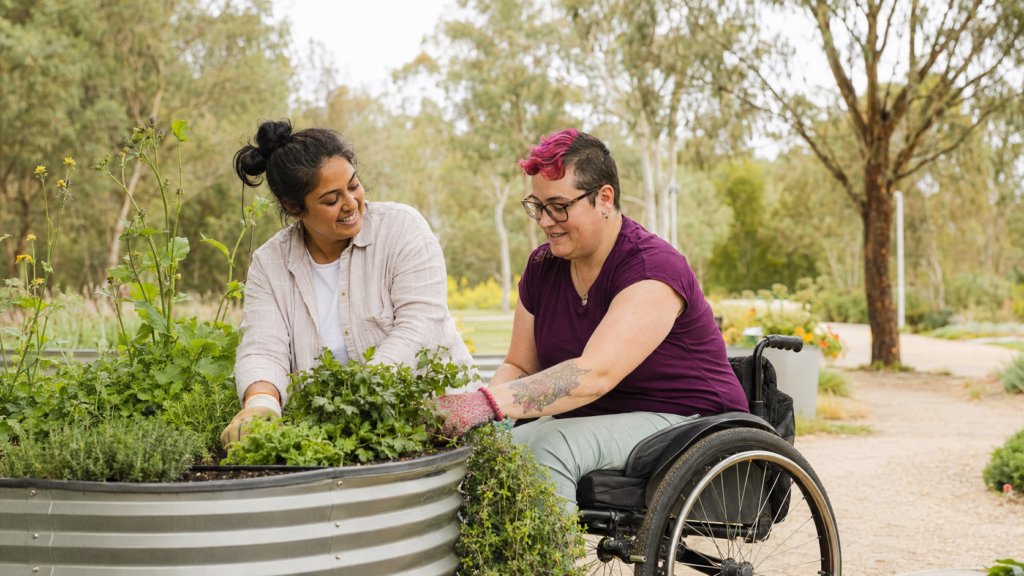
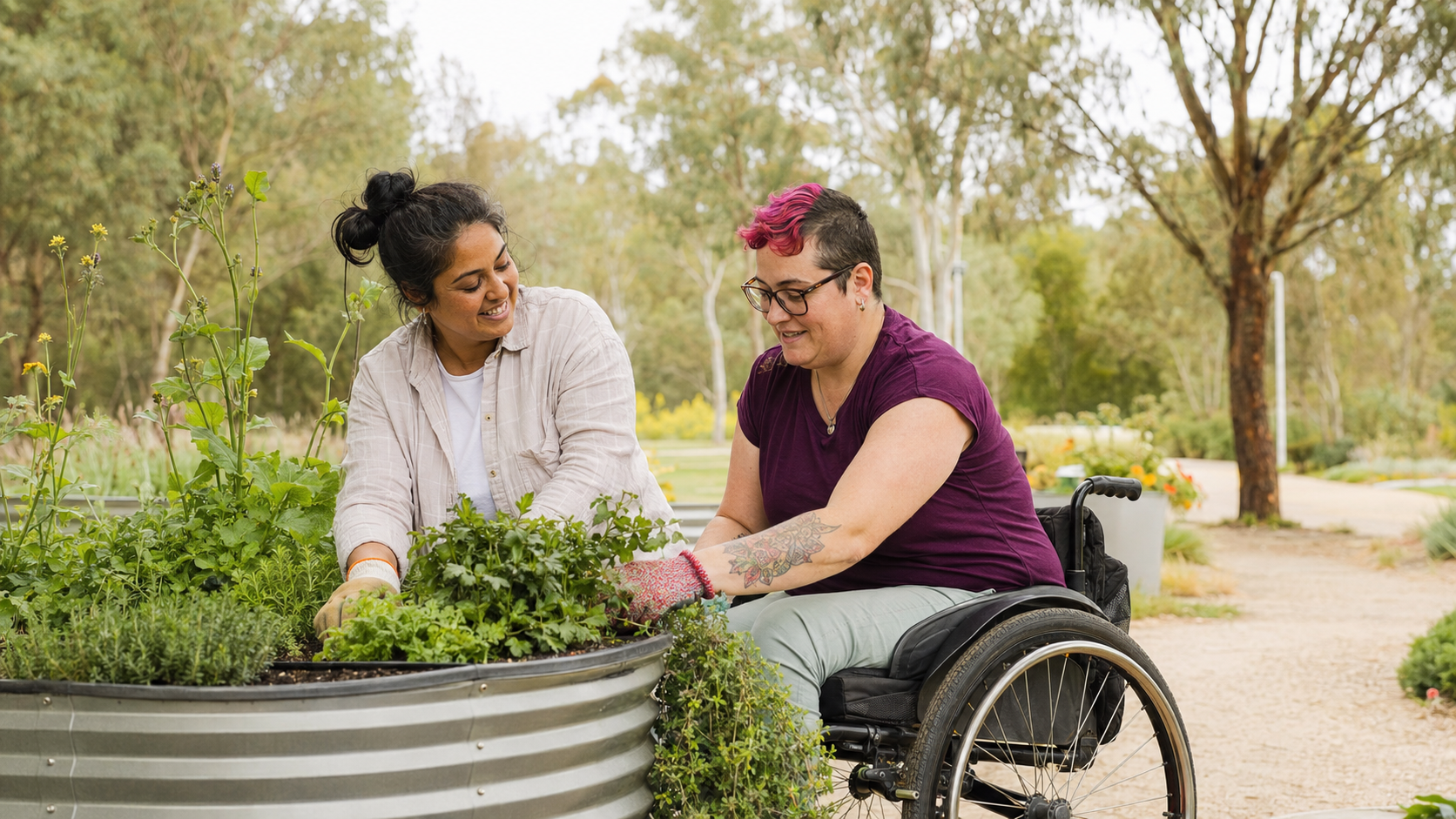
Examples can include support to attend a community group, visit a library, participate in sport, volunteer, learn to use public transport, attend a cultural event, practise communication in everyday settings or build confidence in unfamiliar environments. Activities should be chosen with the participant, not imposed through a generic provider program.
The official NDIS explanation of Core supports says assistance with social and community participation may fund support workers who help participants become more independent in their community and personal interests. The NDIS Capacity Building guidance explains that increased social and community participation can support people to find and join activities, develop social skills, build networks and increase independence.
Core support and Capacity Building support are not the same
Community participation can appear in different parts of an NDIS plan. Core assistance commonly focuses on the practical support a participant needs to attend and take part. Capacity Building funding generally focuses on developing skills, confidence, independence or connections. The correct budget and support item depend on the participant’s plan and the nature of the service.
For example, a participant may use Core funding for a support worker to accompany them to a weekly community activity. A Capacity Building support may instead focus on learning the route, developing communication strategies, building confidence to join a group, or gradually reducing the level of direct assistance. A service should not be described as capacity building merely because that wording sounds positive. The way it is delivered, documented and connected to a goal needs to support that description.
What can NDIS community participation fund?
Depending on the plan and applicable NDIS funding rules, support may include a worker’s time, disability-related assistance during an activity, skills development, preparation and communication support, or agreed transport connected with delivering the support. It may be provided individually or in a group where that arrangement suits the participant.
The NDIS describes social and recreation support as the extra help a person needs because of disability. Its guidance explains that participants usually pay the ordinary cost of the activity that everyone pays, while the NDIS may fund the additional disability-related support required to participate. There can be limited exceptions under particular support items and circumstances, so providers and participants should verify the current plan and official guidance rather than assume every fee is either covered or excluded.
What is usually not covered?
Ordinary living and recreation costs are generally personal expenses. Examples may include a standard cinema ticket, meal, club membership, entry fee or ordinary sporting equipment. NDIS funding cannot be used simply because an activity is enjoyable or connected to a goal. The expense must be an NDIS support and meet the relevant funding requirements.
A practical way to separate the costs is to ask: would a person without disability ordinarily pay this amount to participate? If yes, it is often a personal cost. What additional assistance is needed because of disability? That disability-related component may be the part the NDIS can fund, subject to the participant’s plan and current rules.
Planning community access around the person
Good community access begins with the participant’s interests, communication preferences, sensory needs, mobility, safety considerations, cultural identity and desired level of support. It should not begin with a provider’s fixed list of outings. Two participants with similar funding may want completely different routines and require different approaches.
A useful planning conversation covers what the person already enjoys, what they want to try, barriers that have made participation difficult, the environments where they feel comfortable, how they communicate choice, and what a successful session would look like. This creates a clearer basis for matching a suitable support worker and reviewing whether the service is helping.
Questions to ask a community access provider
- How will you learn about the participant’s interests and preferences?
- Can the participant meet or speak with the proposed support worker first?
- How do you plan for sensory, mobility, communication and health needs?
- What happens if the participant wants to change the activity or worker?
- How are transport, provider travel, activity costs and cancellations explained?
- How will progress notes connect the support to the participant’s goals?
- How do you support choice without creating pressure to participate?
- How will risks be managed without unnecessarily restricting independence?
Clear answers help participants, families and referrers distinguish person-centred direct support from an arrangement that simply fills rostered hours.
Community participation is one of the more open-ended NDIS support categories, and that flexibility is exactly why it’s worth understanding clearly – both what it can fund and how to use it well, rather than leaving it under-utilised because it’s not as clearly defined as personal care or therapy.
The basic idea behind community participation funding
This category is designed to support participants to engage in social, recreational, community and civic life – sport, hobby groups, education, volunteering, cultural or faith communities, or simply building the confidence and skills to go out and participate independently. If you want the broader picture of how this fits alongside transport support, our community participation and transport pillar guide covers both together.
What’s actually funded versus what isn’t
Funding typically covers the support needed to access and participate in an activity – a support worker attending with you, help building confidence to attend independently, or skill development toward participating with less support over time. It generally doesn’t cover the cost of the activity itself (a gym membership, an event ticket, equipment) – that’s usually a personal expense, separate from the disability-related support funding.
Building routines versus one-off outings
The most effective use of this funding tends to build toward sustainable, regular routines – the same weekly group, the same class – rather than a string of novel one-off outings that don’t build lasting connections. Regular attendance also tends to build familiarity and comfort over time, which supports genuine independence.
Support worker involvement
Depending on the activity and your needs, support can range from a worker attending alongside you throughout to a lighter touch – help getting started, then stepping back as confidence builds. Being clear with your provider about which level of involvement suits which activities helps avoid over- or under-supporting a given routine.
Starting from scratch if you’re not sure what you want
Not every participant has a clear list of interests ready to go. A useful starting conversation covers what someone used to enjoy, what they’ve been curious about trying, and what’s realistically available and accessible nearby – then trials a few options rather than committing immediately to one ongoing routine.
How this interacts with transport funding
Community participation often works alongside transport support, since getting to and from an activity is frequently part of the picture. If transport is a barrier for you, it’s worth understanding how NDIS transport support works and how to access it as a complementary piece of the puzzle.
Reviewing whether your current routine is actually working
It’s worth periodically checking whether a community participation routine is genuinely building connection and confidence, or has become a passive habit that isn’t adding much value. Raising this with your provider or support coordinator can help redirect funding toward something more effective if needed.
Common questions participants have
People often ask whether this funding can cover a specific class fee (usually no, but the support to attend, yes), whether it can be used for family outings (generally it’s about the participant’s own social and community goals, not general family activities), and how much funding is reasonable to expect (this varies by assessed need and goals set at planning).
What community participation can fund
Community participation funding can cover a support worker to accompany you to social, recreational, or community activities, assistance to develop skills for community engagement, and in many cases transport to get to and from these activities. What it typically doesn’t cover is the cost of the activity itself – an entry fee, membership, or class cost is usually a separate, personal expense, with the NDIS funding the support needed to access and participate rather than the activity itself.
Examples of what this looks like in practice
This might mean a support worker accompanying you to a local sports club, helping you attend a regular class or community group, supporting you to volunteer, or simply assisting with outings that help maintain social connections. The specific activities should reflect genuine personal interests rather than a generic, provider-determined list of options.
How this funding is assessed
The amount of community participation funding in your plan reflects your assessed support needs and stated goals around social and community engagement. If your current funding doesn’t seem to match what you’d genuinely like to achieve in this area, this is worth raising at your next plan review with specific examples of what additional support would enable.
Building a routine around community engagement
Community participation tends to work best as a consistent routine – the same class, group, or activity on a regular basis – rather than occasional, unplanned outings. This consistency helps build genuine social connections and makes the most of the funding allocated to this part of your plan.
Finding the right support for this funding
The right support worker for community participation should have some genuine compatibility with your interests, not just general availability. A worker who’s actually engaged with the activities you’re doing together tends to make the experience considerably more enjoyable and sustainable than one who’s simply present.
Getting started with community participation support
If you’re setting up this kind of support for the first time, or want to make better use of existing community participation funding, get in touch to talk through your specific interests and goals.
Group versus one-on-one community support
Community participation can be delivered either one-on-one or in small groups, each with genuine advantages. One-on-one support offers more individual attention and flexibility to pursue specific personal interests, while group support can be more cost-effective and provides built-in social opportunities with peers. Neither is inherently better – the right choice depends on your specific goals and preferences.
How transport funding connects to community participation
Transport support often works alongside community participation, funding the travel needed to actually get to and from activities. Understanding how transport funding is structured in your plan helps you make the most of both parts of this funding category together. See our guide to how NDIS transport support works and how to access it in Canberra for more detail on this specific funding.
Connecting this to mental health and wellbeing
Regular social connection and meaningful activity are recognised protective factors for mental health, making community participation support valuable well beyond the specific activities involved. If mental health is part of your broader NDIS goals, see our recovery-oriented guide to psychosocial and autism support for how community participation fits into a broader, holistic approach to wellbeing.
Reviewing your community participation support over time
Interests and circumstances change, and it’s worth periodically checking whether your current community participation activities still reflect what genuinely matters to you, rather than continuing an arrangement out of habit. A good provider will proactively raise this kind of review rather than waiting for you to request a change.
Making the most of a limited budget
Community participation funding, like most parts of an NDIS plan, is finite, so it’s worth thinking strategically about how to use it. Prioritising activities with genuine, sustained meaning to you – rather than spreading support thinly across many one-off outings – tends to deliver more value both in terms of experience and in terms of measurable progress toward social and community goals.
What to look for in a genuinely good match
Beyond simple availability, a good community participation support worker should demonstrate real interest in the specific activities involved, a track record of building genuine rapport with other participants, and a willingness to adapt their approach based on your feedback over time. These qualities matter more to the actual experience than qualifications or years of general experience alone.
How this fits with broader capacity-building goals
Community participation isn’t just about the specific activity – it often supports broader capacity-building goals like improving social skills, building confidence in new environments, or developing routines that carry over into other areas of life. A good provider frames this support with these broader goals explicitly in mind, rather than treating each outing as an isolated event.
Navigating accessibility considerations
Depending on your specific needs, accessibility considerations – physical access, sensory environment, communication support – may need to be factored into choosing appropriate activities and venues. A good support worker actively considers these factors when helping select and prepare for community activities, rather than leaving you to navigate barriers on your own once you arrive.
What families should know about this part of the plan
For family members supporting a participant, community participation is worth taking seriously as a genuine contributor to overall wellbeing, not simply a lower-priority add-on to more clinical or practical supports. Encouraging and supporting engagement in this part of the plan often has a meaningful positive impact on quality of life beyond what’s immediately visible.
Signs this part of your plan needs more attention
A few signs that community participation support isn’t being used to its full potential include activities that feel generic or interchangeable rather than genuinely tailored, a worker who seems more focused on supervision than active engagement, or a general sense that outings have become routine without any real progress toward broader goals. If any of these feel familiar, it’s worth raising directly with your provider.
Bringing this back to your own goals
Ultimately, community participation and social connection funding exists to support a genuinely fuller, more connected life – not simply to fill time or tick a box in your plan. Approaching this part of your support with real intentionality about what matters to you personally tends to produce considerably more meaningful outcomes.
How to start the conversation with a provider
When approaching a provider about community participation support, come prepared with specific interests and goals rather than a general request for “social support.” The more concrete you can be about what genuinely matters to you – a particular sport, a specific community group, an interest you’d like to pursue further – the better a provider can match you with genuinely suitable support.
Whatever your interests, the goal of this part of your plan is the same: genuine, sustained connection to your community, on your own terms. Reach out whenever you’re ready to explore what that could look like for you.
Getting the Most Out of This Funding
Community participation funding works best when it’s tied to something specific you actually want to do, whether that’s joining a regular social group, attending a class, or getting involved in local volunteering. Vague goals like “more social interaction” are harder for a provider to plan around than a concrete activity with a regular schedule.
It’s worth spending some time with your NDIS contact or plan support person identifying activities that genuinely interest you before locking in a support arrangement. A support worker who’s helping you attend something you actually enjoy makes for a far more sustainable and motivating arrangement than one built around a generic activity chosen mostly to use up funding.
For more on how this pairs with getting around your community, see our guide on how NDIS transport support works, and visit our Community Participation hub for the full picture.
It’s also worth reviewing this funding each year with your NDIS contact or plan support person, since interests and goals naturally shift over time and a plan that worked well last year may not reflect what you want to be doing now. Keeping the activity genuinely relevant to you is what makes this funding worthwhile.
If you’re not sure where to start, our team can help you connect this funding to activities that genuinely fit your interests and your local community.
A little planning now goes a long way toward making this funding genuinely useful rather than an afterthought in your plan.
We’re happy to talk this through whenever you’re ready.
Just get in touch and we’ll take it from there.
Getting started or reviewing your community participation supports
If you want to explore what community participation could look like for your situation, or review whether your current routine is working, read more about community participation support through CCS or get in touch to talk it through.