
Community participation is where a lot of the NDIS’s actual intent – building an ordinary life, not just managing a disability – plays out day to day. It’s also one of the categories participants under-use, often because it’s less clearly defined than personal care or therapy.
What NDIS community participation actually funds
NDIS community participation transport should begin with participant goals, preferences, communication needs and practical support requirements. The right approach is individual, respectful and reviewed with the participant, rather than based on assumptions about diagnosis or funding.
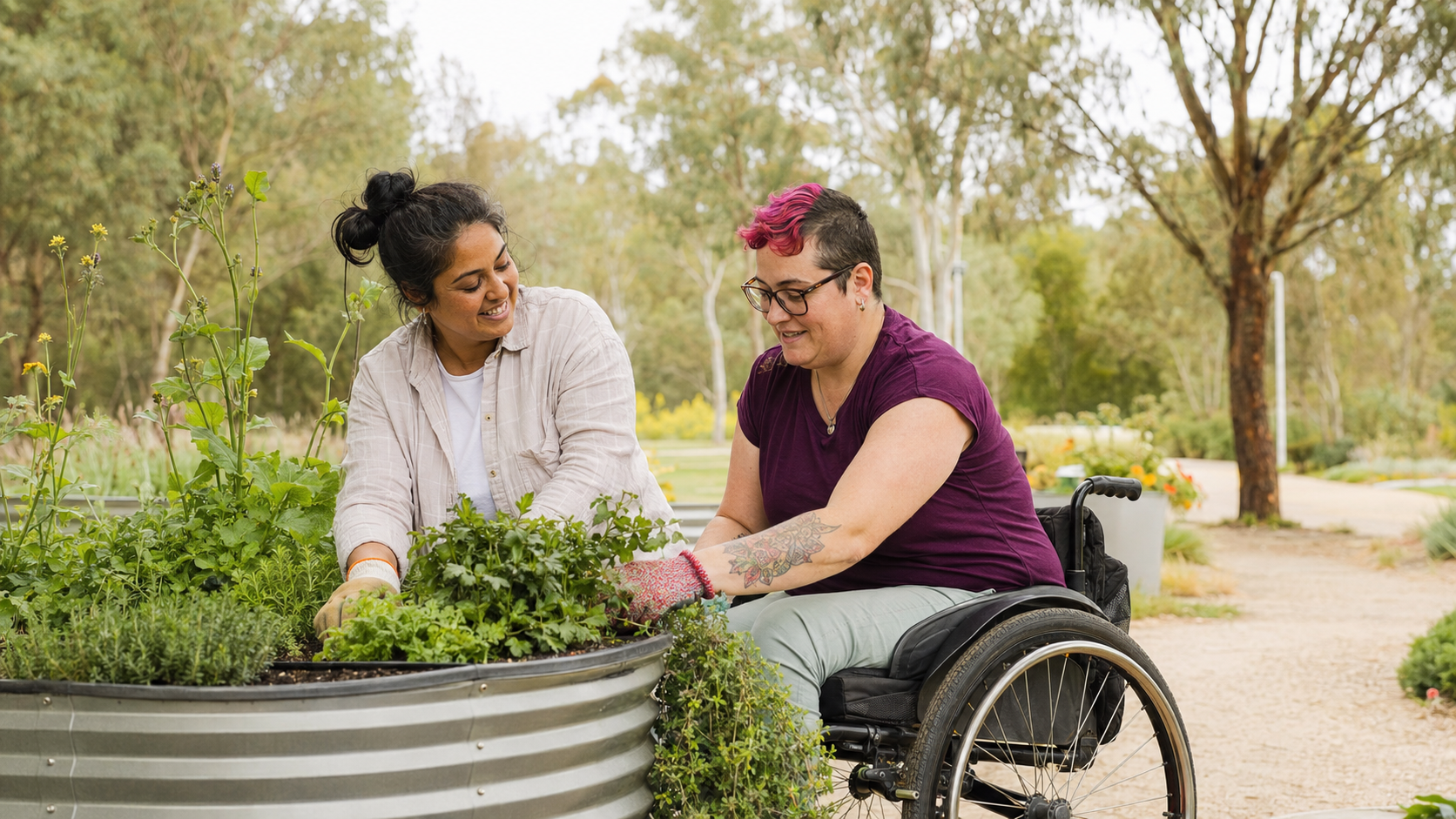
Check current information in the official NDIS guidance on Core supports.
This category can fund support to attend social, recreational, community or civic activities – sport, hobby groups, volunteering, education, faith communities, or simply building the skills and confidence to go out independently. It’s not for the activity itself (a gym membership, a bus ticket) but for the support needed to access and participate in it.
Transport support
NDIS transport funding can cover the cost of getting to and from activities – including community participation, work, or other supports – when a participant can’t safely or independently use public transport. It’s usually funded as a set amount rather than an open-ended budget, so understanding how it’s calculated matters for planning.
How this fits with a support worker’s time
Often, community participation and transport work together: a support worker travels with a participant to an activity, supports them while there, and travels back. Providers should be upfront about how travel time is costed against your plan, since this varies.
Building real routines, not one-off outings
The most effective use of this funding tends to build toward regular, sustainable routines – the same weekly group, the same gym session – rather than a series of novel one-off outings that don’t build lasting connections or independence.
Getting started if you’re not sure what you want
Not every participant walks in with a clear list of interests. A good starting conversation covers what someone used to enjoy, what they’ve been curious about, and what’s realistically available locally – then trials a few options before committing to an ongoing routine.
Community participation and transport in Canberra
Local geography matters here – Canberra and Queanbeyan’s spread-out layout means transport support is often genuinely necessary rather than a convenience, and knowing which community groups and activities are realistically accessible makes a real difference to whether a plan actually gets used. You can find out more about community participation support through CCS or read about how NDIS transport support works locally.
What community participation funding actually covers
Community participation funding sits under Core Supports and is designed to help you take part in social, recreational, community, and civic activities that matter to you – joining a local sports club, attending a regular class, visiting friends, volunteering, or simply getting out of the house regularly. It can fund a support worker to accompany you to these activities, and in many cases can also fund the transport to get there. What it can’t fund is the activity itself in most cases (a gym membership fee, for example, is usually the participant’s own cost) – it funds the support needed to access and participate in the activity, not the activity itself. Understanding this distinction upfront avoids confusion when planning how to use this part of your budget.
How NDIS transport funding works
Transport funding under the NDIS can work in a few different ways: a fixed transport allowance based on your assessed level of need (independent of specific trips), funding for a support worker’s travel time and costs when transport is part of a broader support activity, or in some cases funding toward modified vehicles or driving lessons where relevant to your goals. The fixed allowance is paid regardless of how much you actually travel, which means for some participants it’s worth using strategically rather than assuming it only covers appointments. See how NDIS transport support works and how to access it in Canberra for the specifics of how this funding is structured and accessed.
Building a routine around community participation
Community participation tends to work best as a regular routine rather than occasional, ad hoc outings. Participants who build consistent weekly activities – the same class, the same social group, the same volunteering shift – tend to build stronger social connections and see more meaningful capacity-building outcomes than those using this funding sporadically. When setting up community participation support, it’s worth being specific about what “getting out and connected” actually means for you personally, rather than accepting a generic offering of activities from a provider.
Finding the right support for community access
The right support worker for community participation should share some genuine interest or compatibility with the activities involved – a worker who’s engaged and enthusiastic about, say, attending a sports club with you makes a real difference to how enjoyable and sustainable the arrangement feels, compared to a worker who’s simply present but disengaged. It’s entirely reasonable to ask a provider how they match workers to participants’ specific interests, not just availability and qualifications.
Community participation and mental health
For participants managing mental health conditions, community participation support can be particularly valuable as part of a broader recovery-oriented approach – social connection and meaningful activity are recognised protective factors for mental health, not just “nice to have” extras. If mental health is part of your NDIS plan, see our recovery-oriented guide to psychosocial and autism support for how community participation fits into a broader support approach focused on genuine recovery and capacity building.
When transport and community support isn’t working
Common issues include support workers who default to the same few activities regardless of a participant’s actual interests, transport funding that’s used inefficiently, or community participation that becomes passive (just being present somewhere) rather than genuinely engaging. If any of these sound familiar, it’s worth raising directly with your provider or support coordinator – this part of a plan often gets less proactive attention than core daily living or SIL supports, simply because it’s seen as lower stakes, but it matters significantly for quality of life.
Getting started with community participation and transport support
If you’re setting this up for the first time, or reviewing an arrangement that feels more like passive supervision than genuine participation, get in touch to talk through what real community connection could look like for you, based on your actual interests and goals rather than a generic activity list.
Group-based vs one-on-one community support
Community participation can be delivered one-on-one or in small groups, and each has genuine advantages depending on your goals. One-on-one support offers more individual attention and flexibility to pursue specific personal interests, while group-based support can be more cost-effective and offers built-in social opportunities with peers. Neither is universally better – participants focused on building specific social connections might benefit from group activities, while those with very particular interests or higher support needs during outings often do better with dedicated one-on-one time. It’s worth discussing both options with your provider rather than defaulting to whichever model they happen to offer.
Planning transport around your actual routine
Transport support works best when it’s planned around your real weekly routine rather than treated as a one-off, per-trip arrangement. If you have regular commitments – a weekly class, regular medical appointments, a part-time job or volunteering role – building consistent transport arrangements around these fixed points tends to be more reliable and often more cost-effective than ad hoc bookings each time. This is also where a good support coordinator can add real value, helping map out a transport plan that covers your actual regular needs rather than leaving you to arrange each trip separately.
Rural and outer-suburban considerations
Access to community participation and transport support can look quite different depending on where you live. Participants in outer suburbs or more rural parts of the ACT and surrounding region sometimes face longer travel times to reach preferred activities, fewer local providers offering community access support, and less frequent public transport as a backup option. If this applies to you, it’s worth specifically discussing with providers how they handle service delivery in less central areas, including whether additional travel time affects cost or availability.
Making the most of this part of your plan
Community participation and transport funding is sometimes treated as a lower priority than core daily living or accommodation supports, but it plays a real role in wellbeing, social connection, and long-term capacity building. Participants who use this funding intentionally – with clear goals about what kind of connection and activity actually matters to them – tend to get considerably more value from it than those who let a provider default to generic, low-engagement outings. Being specific about what you want from this part of your plan, and holding providers to that standard, makes a meaningful difference.
Connecting community support to your broader plan
Community participation works best when it’s not treated as an isolated line item. If you also have support coordination in place, your coordinator should understand your community and social goals well enough to help match you with the right activities and workers, not just the right home care or SIL arrangement. Similarly, if daily living support is part of your plan, coordinating the timing and staffing of home care and community access can prevent gaps or overlaps in your weekly routine. Our guide to NDIS home care and daily living support covers how these pieces typically fit together for participants managing several support types at once.
Reviewing community participation over time
Interests and goals change, and community participation support should evolve accordingly. An activity that felt meaningful a year ago might no longer suit you, or new interests might emerge that aren’t yet reflected in your support plan. Rather than waiting for a formal review, it’s worth periodically checking in with your provider about whether the current activities and support arrangement still reflect what you actually want out of this part of your plan.
The value of getting this part of your plan right
It’s easy to underestimate how much community participation and transport support contributes to overall quality of life, precisely because it’s less clinical and less urgent-feeling than personal care or accommodation supports. But regular, meaningful social connection and independence in getting around your community are consistently linked to better mental health and wellbeing outcomes. Treating this part of your plan with the same intentionality as any other support type tends to pay off significantly over time.
If you’re not sure whether your current community participation and transport funding is being used well, a direct conversation with a provider who takes this part of the plan seriously – rather than treating it as an afterthought – is usually the fastest way to find out what’s actually possible. Reach out whenever you’re ready to talk through what genuine community connection could look like for your specific goals and interests.
A final word on independence
At its core, this part of the NDIS exists to make sure disability doesn’t mean isolation. Getting out, staying connected, and moving around your own community independently are basic parts of a good life that too many participants end up missing out on simply because this funding wasn’t set up thoughtfully. It’s worth the effort to get right.
Whether you’re a participant, a family member, or a support coordinator trying to make this part of a plan work harder, the underlying goal stays the same: real, sustained connection to the community, not just supervised time away from home.
That’s the standard worth holding every provider to, including us.
Getting this right takes a bit of upfront effort, but it consistently pays off in a support arrangement that genuinely fits your daily life rather than one you simply have to work around.
Reach out whenever you’re ready to talk through the specifics of your own situation – there’s no need to have every detail figured out before that first conversation.
Every participant’s circumstances are a little different, and a genuinely good provider takes the time to understand yours specifically rather than applying a one-size-fits-all approach across the board.
If you’re wondering exactly what community participation funding can cover, see our detailed guide on what NDIS community participation is and what it can fund.
Next step
If you’re trying to work out what community participation or transport support could look like for your situation, get in touch and we’ll talk it through.